In the world of tactical lasers and IR devices, it’s easy to get distracted by the “box.” You see a clean housing, some cool stickers, and a price tag that looks like a steal. It looks great on your rifle for a quick Instagram photo, and in the daytime, everything seems fine.
But the moment the sun goes down and you flip your night vision goggles (NODS) into position, the reality sets in. That “bargain” unit starts to show its true colors.
When it comes to low-light performance, the slogan is simple: Stop looking at the box, and start looking at what your NODS actually see.
The “Dirty” Light Problem (SomoGear IR Illuminator vs. Other Brands)
Most competitor brands in this space focus 90% of their budget on the external shell and 10% on the actual emitters. When you fire up their IR illuminators, you’ll often see what we call “visual noise.” These are weird rings, dark splotches, and grainy artifacts that litter your field of view.
When you’re trying to identify a target at 100 yards, you don’t want to be fighting through a “dirty” beam. At SomoGear, we prioritize the glass and the emitter. Whether it’s our NGAL or PEQ-15, our focus is on providing a clean, consistent “wall of light.” Your night vision works best when it has high-quality light to amplify—not a grainy mess from a cheap LED.
VCSEL Tech: A Night and Day Difference
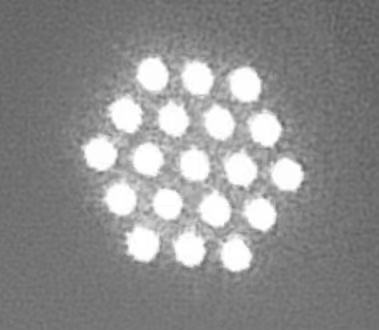
You’ve probably seen the term VCSEL floating around. While other competitor brands use standard LEDs with a simple lens to save on costs, we’ve leaned heavily into VCSEL technology.
Why? Because VCSEL provides a laser-like consistency across the entire illuminator spread. Other brands often have a “hot spot” in the middle that washes out your vision, surrounded by a flood that is too weak to be useful. A SomoGear VCSEL unit gives you an even, smooth throw that makes your environment look natural, not like you’re pointing a cheap flashlight through a screen door.
The “Zero” Test: Can It Hold Up?
Here is where the “box” lovers usually get disappointed. A lot of competitor units look the part, but they aren’t potted. Without internal epoxy potting, the delicate electronics and laser diodes are just waiting to fail.
If you’re running a GBB (Gas Blowback) rifle or using your unit for real-world training, the vibration will eventually shift the zero on a lower-tier unit. We’ve seen units from other brands where the visible and IR lasers aren’t even co-aligned—meaning you have to zero them separately. Our systems are built to stay slaved and hold zero, shift after shift.
Training-Ready vs. Photo-Ready
We get it—everyone wants a cool-looking setup. But there is a massive difference between a unit built for a photo shoot and a unit built for a 3-day night vision course.
The competition often cuts corners on the small stuff: leaky battery caps, mushy activation buttons, and plastic mounts that wobble on a MIL-STD-1913 rail. We focus on CNC-machined housings and reinforced internals because we know that gear is only good if it works when you’re tired, it’s raining, and you’re moving fast.
The Real Talk
The next time you are shopping for an IR aiming device, ignore the flashy marketing for a second. Ask yourself: How will this look through my tubes?
While other competitor brands are racing to the bottom on price, we are racing to the top on performance. Because at the end of the night, the only thing that matters is a clear sight picture and a laser that stays where you put it.
Stop looking at the box. Look at the beam.